
A 24-second parking puzzle for sharp eyes
One compact Nat Geo Kids brain game that leaves the child to spot the answer.


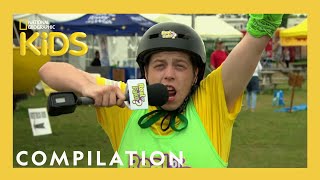
A parking lot becomes a twenty-four-second thinking problem in this Nat Geo Kids brain game. The clip is brief, low sensory and emotionally neutral, giving an eight- or nine-year-old a clean puzzle rather than a long explanatory performance. Explorers are the strongest match, with independent children also well served by the self-contained challenge. Sensory seekers may find it too slight, but that is the honest limit. This is a quick mental stretch, not a session, and it finishes before the parent has time to over-explain the clue.
At a glance
Will it actually calm them down?
 Eases a wound-up mood back to settled.
 A gentle lift on a flat, low-energy afternoon.
 Steady enough for meltdown recovery.
Scores measure how reliably this video moves a child toward a settled, regulated state. In the Piko app, kids tell us their weather and we do the matching automatically.
The skill every one of these picks is trying to support: what self-regulation in children means.
Which kids will love it?
Why it works
Ordinary spaces make good puzzles because children think they already know what they are seeing. The parking-lot set-up asks them to look again, rewarding observation and reasoning without surrounding the challenge with noise. Explorers can test a hunch, while independent viewers manage the whole problem alone. The educational value is strong for such a short clip because the answer depends on thinking rather than recall. Its restraint also leaves room to ask how the child solved it, which is often more revealing than whether they were right.
When to reach for it
- A quick thinking warm-up Use the puzzle before homework or another task requiring close attention.
- A family spot-the-clue round Let everyone commit to an answer before the solution appears.
- During a brief wait Twenty-four seconds supplies a complete challenge without starting a feed.
Sensory & SEN notes
If you are weighing this one up for an autistic child, the same checks we ran here are the ones worth running yourself: how to choose videos for autistic children.
If they love this, try these



Questions parents ask
Is the Parking Lot Brain Game suitable for an 8-year-old?
Yes. It is especially well matched to explorer and independent children in the older primary years.
Is this Nat Geo Kids puzzle sensory friendly?
Yes. It has low sensory intensity and no listed audio or visual triggers.
Does a 24-second brain game have learning value?
Yes. It exercises observation and reasoning through one focused visual problem.
40+ checks per video, with a final pass from the review desk · Scored 20 July 2026 · We do not host videos; playback is via YouTube's official embed.