
Kinetic Sand Cutting ASMR: fourteen minutes of pure sensory calm
No plot, no dialogue, no demands. Just the satisfying sound and sight of sand being sliced, over and over.
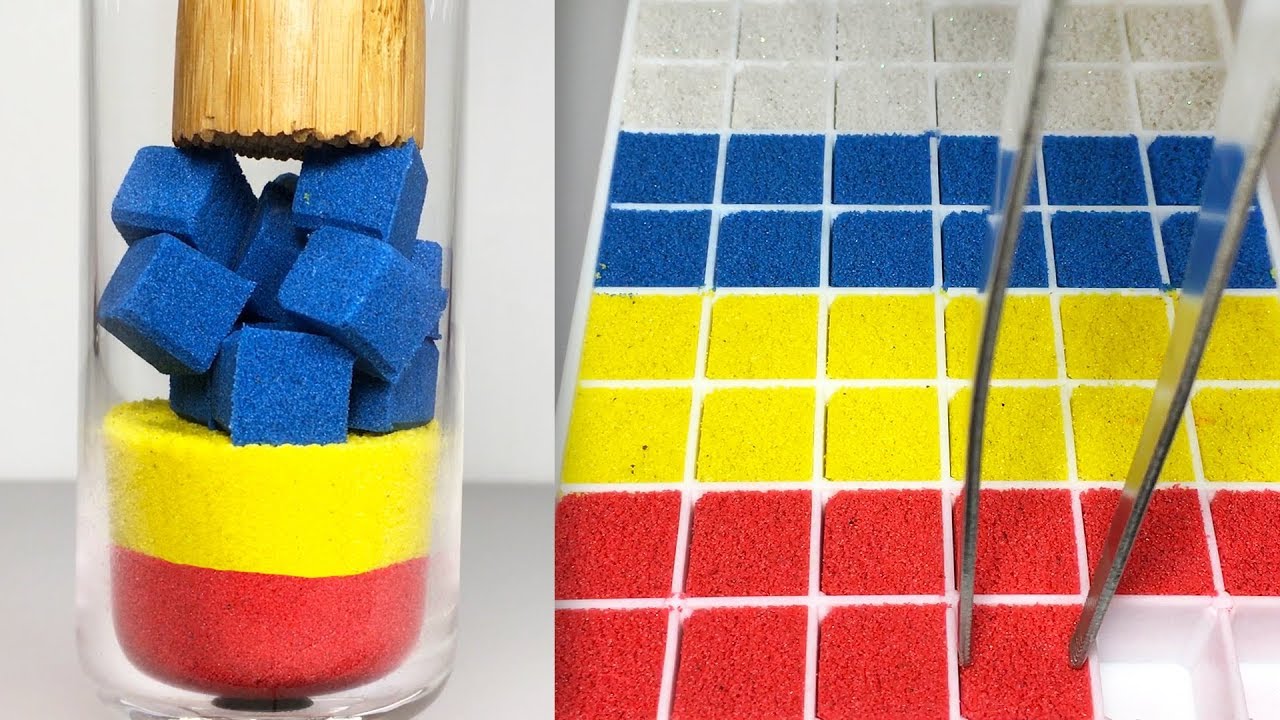

This is pure sensory content: close-up shots of kinetic sand being cut, crumbled and pressed, with the soft repetitive sound doing all the work. There's no story, no character, nothing to follow, which is exactly the appeal. It's one of the most dependable calming choices in this batch, built specifically for winding down rather than entertaining in the traditional sense.
At a glance
Will it actually calm them down?
 Brilliant on Windy days (fizzy, wound-up)
 Helps on Stormy days, once the peak has passed
Scores measure how reliably this video moves a child toward a settled, regulated state. In the Piko app, kids tell us their weather and we do the matching automatically.
If videos usually end in tears in your house, the reason is rarely the video itself: why children melt down after screen time.
Which kids will love it?
Why it works
Our analysis clocks the average shot at 12.5 seconds, remarkably slow and steady, letting each cut of sand play out in full rather than jumping to the next one. There's no dialogue and no suggestion-based prompting either, which is unusual even for calm content: this genuinely asks nothing of the viewer at all, it simply offers something soothing to watch and listen to.
Our scoring names this directly as suited to sensory regulation and to children with ASD or ADHD, and the wound-up-to-settled score backs that up strongly. The one honest caveat is that the audio is repetitive by design, cutting, crumbling, pressing, on a loop, so while most children find that soothing, a child who specifically dislikes repetitive textures or sounds may not.
It won't hold a child looking for a story or characters to follow, and our scoring is upfront that it isn't built for children seeking high-action narrative. That's fine. It isn't trying to be that kind of video.
When to reach for it
- The pre-bed wind-down. Slow, repetitive, sound-led content that asks nothing of your child beyond watching.
- A sensory regulation break. Genuinely useful for a child who needs a few minutes of predictable, low-demand sensory input.
- Quiet time with no narrative pressure. No plot to follow means no risk of a cliffhanger dragging things past your carefully planned screen time.
Sensory & SEN notes
If you are weighing this one up for an autistic child, the same checks we ran here are the ones worth running yourself: how to choose videos for autistic children.
If they love this, try these




Questions parents ask
What age is this best for?
It works well from around 4 to 9, since the appeal is sensory rather than age-specific. Many older children who enjoy ASMR content settle into it just as easily.
Is it educational?
No, and it isn't trying to be. This is purely sensory, satisfying content, useful for calm and regulation rather than for learning.
Is this good for ASD or ADHD?
Our scoring specifically names this as suited to sensory regulation for children with ASD or ADHD, thanks to its slow pace, predictability and complete lack of demand language.
Any sensory concerns to know about?
The sound is repetitive by design, which most children find soothing, but it's worth knowing if your child specifically dislikes repetitive sounds or textures before pressing play.
40+ checks per video, with a final pass from the review desk · Scored 17 July 2026 · We do not host videos; playback is via YouTube's official embed.