
Scratch Garden's Freeze Dance: active play with a listening-skills hook
Energising movement that builds real stop-and-listen practice into the fun. A proper brain break, not bedtime viewing.


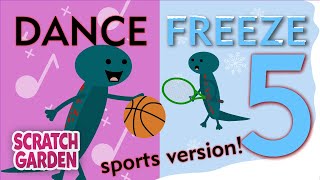
Scratch Garden's freeze dance format does something most energising kids' content doesn't: it builds a stop-and-listen instruction directly into the fun. Music plays, bodies move, then "freeze" and everybody has to actually stop, which is a genuine listening-skills and impulse-control exercise wearing a party outfit. At over 21 minutes it's a proper brain-break session, not a quick clip, energising throughout but with more built-in regulation value than most content this lively.
At a glance
Will it actually calm them down?
 Brilliant on Rainy days, a proper active session indoors
Scores measure how reliably this video moves a child toward a settled, regulated state. In the Piko app, kids tell us their weather and we do the matching automatically.
For the long stretches where this sort of video does a lot of heavy lifting: surviving the holidays without a screen-time war.
Which kids will love it?
Why it works
Scratch Garden's freeze dance format does something most energising kids' content doesn't: it builds a stop-and-listen instruction directly into the fun. Music plays, bodies move, then "freeze", and everybody has to actually stop, a genuine listening-skills and impulse-control exercise wearing a party outfit. Shots average 5.5 seconds, slower than most of the energetic content in this batch, giving each freeze moment proper room to land.
This is also the one video in this whole batch that our scoring flags for actual demand language, the game literally instructs "freeze", and it's worth knowing that's there. But it's playful, game-based instruction rather than anything coercive, autonomy-respecting throughout, and that stop-start structure is precisely why we've nudged its settling score up a touch from the raw measurement: freeze dance genuinely trains the pause-and-listen skill that a lot of purely energising content doesn't attempt at all.
At over 21 minutes it's a proper brain-break session, not a quick clip, so it suits active play and classroom-style listening practice well. Our scoring flags it as unsuitable for bedtime or quiet time, unsurprisingly, and it's not built for sensory-avoiding children given the loud, repetitive music throughout.
When to reach for it
- The proper brain break. Built for active play with a genuine listening-skills hook, not just movement for its own sake.
- Practising stop-and-listen, disguised as a game. The freeze mechanic is real impulse-control practice; it just doesn't feel like a lesson.
- A long, active session, not bedtime. Over 21 minutes of energising movement; save the calmer options for the evening.
Sensory & SEN notes
The weather chips above are our shorthand for the mood a child arrives in: what Piko Weather means.
If they love this, try these




Questions parents ask
Does this video actually give instructions to my child?
Yes, and it's the only video in this batch our scoring flags for demand language: the game says "freeze" and children are meant to stop. It's playful rather than coercive, and still rated autonomy-respecting and PDA-safe overall, but worth knowing it's there if instruction-following is a sensitive area for your child.
Is freeze dance actually good for anything beyond fun?
Genuinely, yes. Stopping on command builds listening skills and impulse control, which is why it's often used as a classroom brain break. It's exercise with a hidden self-regulation lesson attached.
Good for bedtime?
No, explicitly flagged as unsuitable for bedtime or quiet time. It's energising and loud throughout; keep it for active daytime play.
What age suits this best?
Best for younger children, roughly 4 to 9, and works well as a classroom or group activity given the listening-skills angle.
40+ checks per video, with a final pass from the review desk · Scored 17 July 2026 · We do not host videos; playback is via YouTube's official embed.