
MrBeast · Energy, behaviour and switch-off
Why Is MrBeast So Hard to Switch Off?
It is not just the pace. A lot of these videos simply do not stop, they hand you off to whatever plays next.
The ending is doing more work than the pace
Most of the conversation about MrBeast and screen time lands on how the videos feel while they play: fast cuts, loud stings, big reactions. That is real, and it is worth reading about separately in why the pace leaves some children buzzing afterwards, which covers what the pace does while your child is actually watching. This article is about something quieter and, we think, just as important for the argument at the end: what happens in the last thirty seconds.
Of the 978 uploads we reviewed for session design, 219 end on what we are calling a cliffhanger ending, built to hand the viewer straight into the next video rather than let the current one close. That leaves 759 that do not do this deliberately, but a video not ending on a hook is not the same as a video actually finishing. We also checked for a natural endpoint, a moment where the video genuinely resolves rather than just trailing off, and found that in 545 of the 978. The other 433 simply stop, with no line drawn under them.
Put those two together and the switch-off problem starts to make sense. A child who has just watched something with no natural endpoint has nothing to hold onto when you ask them to stop. There was no finish for them to reach, so "we're done now" feels arbitrary rather than earned, and the next thumbnail is sat right there doing the opposite job.
Why so many videos are built this way
This is not an accident of editing. Across everything in the catalogue, 221 uploads are built around a product, and a further 34 carry product placement running through the whole thing. A video that exists to keep a brand or a prize in view for as long as possible has a reason to run long and to avoid a clean stopping point: the longer it runs, the more the sponsor gets. Another 86 of the videos we set aside were marked as not much beyond the spectacle itself, meaning the whole point is the stunt, not a story with a shape that resolves.
None of that is a criticism of any one video. It is just how a channel built on scale tends to behave: bigger numbers, longer stunts, more brand mentions, and less reason to build in a proper close. A viewer, especially a young one, has no way of knowing any of this. All they experience is a video that never quite finishes.
What "no ending" looks like at speed
The videos that run hottest tend to be the same ones built without a landing. $10,000 Every Day You Survive In A Grocery Store cuts roughly every 1.5 seconds for its whole run, with music and sound effects that arrive without warning and brand mentions threaded through. $1 vs $10,000,000 Job! and Surviving 24 Hours Straight In The Bermuda Triangle are built the same way: shots averaging about 1.5 seconds, loud throughout, nothing that slows for the last stretch.
$1 vs $100,000 Firework! eases off slightly, averaging closer to 2.2 seconds a shot, but it is still loud and busy the whole way through rather than settling before it ends. None of these four give a viewer a moment to come down before the video stops, so the energy at the final minute is close to the energy at the first. When that is where a video leaves your child, switching off means asking them to drop from full pace to a standing stop with nothing in between.
The uploads that actually finish
Not everything in the catalogue is built this way. A minority of what we reviewed does close properly, and those tend to be a different kind of video entirely: Minecraft builds and let's-plays rather than the stunt format MrBeast is best known for. They run quieter to begin with, and they stop because the task is done, not because the runtime ran out. The Vortex SMP Episode 1 is a longer example of the pattern: it settles rather than winds up, and it stops cleanly.
Videos like these give a child a real place to stop, which is a good part of why they made our shelf in the first place. Building a session around one of these rather than a spectacle-led upload does not remove the switch-off conversation entirely, but it gives you something to point to when it comes. You will find the full set of picks on the MrBeast hub.
What actually changes the fight at switch-off
None of this means avoiding MrBeast altogether. It means being deliberate about which upload you start and about how you close it. A video with a genuine stopping point gives your child a finish to reach, so stopping there tends to land as the video being over rather than you taking something away. A video with no natural endpoint puts you in the position of ending something that was never going to end on its own, which is a harder ask however calmly you do it.
The rest is mostly preparation rather than negotiation in the moment. Agree the stopping point before the video starts, give a warning tied to what is left rather than a bare number of minutes, and be the one who presses stop rather than waiting for your child to choose to. Our guide to ending screen time without a battle goes through the wider approach in more detail.
Picks that actually end
From what made our shelf, these close properly rather than handing off to whatever autoplay serves next.
 Minecraft Let's Play Ep. #2 - Having Fun and Derping!15 min · ages 10-11Runs quiet and closes on the session ending, not a hook
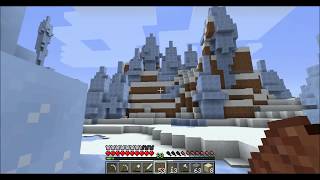 The Vortex Smp Episode 1! Just Derping Around and Explaining Things.25 min · ages 8-9Long, but settles rather than winds up, and stops cleanly
 Crazy Illulsions In Minecraft. (Bigre)3 min · ages 8-9Short and low-key, done when the puzzle is done
 Epic minecraft apartment complex!1 min · ages 8-9Under a minute, finishes when the build finishes
 Amazing minecraft Cathedral!1 min · ages 8-9Same pattern: a task with a real finish line
Making the switch-off easier
- Agree the stopping point before you press playSay it out loud before the video starts, not when you want it to end. If you already know it has no natural endpoint, agree a time instead of "when it finishes".
- Lean on videos that end properlyA video with a genuine stopping point gives your child something to land on. One of the 433 with no natural endpoint gives them nothing, so the next video wins by default.
- Give a warning tied to the video, not the clockTwo minutes before the point you agreed, say so, and name what is left rather than just the time. "Two minutes, then we stop" lands better when it is tied to something they can see coming.
- You press stop, not themOn a video built for a cliffhanger ending, waiting for your child to choose to stop is asking them to fight the video's own design. Close it yourself once the agreed point arrives.
Questions parents ask
Does MrBeast use autoplay to keep kids watching?
We did not measure autoplay behaviour itself, but 219 of the 978 uploads we reviewed are built to end on a cliffhanger that pushes straight into another video, which works with autoplay whether or not a child taps anything.
Why does my child get so upset when I stop a MrBeast video?
A video with no natural endpoint, which was true of 433 of the 978 we reviewed, never gave them a finish to reach in the first place. Stopping partway through something with no ending built in tends to feel more abrupt than stopping something that was already winding down.
Are all MrBeast videos this hard to end?
No. 545 of the 978 we reviewed do reach a genuine stopping point, and the Minecraft-style builds and let's-plays in particular tend to close on a finished task rather than a hook. Picking from those makes switch-off noticeably less of a fight.
What should I do instead of letting the video just run to the end?
Agree the stopping point before you start, and treat the two-minute warning as a countdown to something you have already named, not a surprise. Our longer guide on ending screen time without a battle covers the wider approach.