
MrBeast · Money, influence and the machine
When a MrBeast Video Is Also an Advert
Some of these videos happen to include a product. Others exist because of one. Telling the two apart is a skill a child can actually learn.
Two different ways selling gets built in
MrBeast videos sell things. That is not new information for most parents, but the shape of it is worth understanding, because two very different structures get lumped together as "sponsored content", and only one of them is honest about what it is doing.
Across the 978 uploads in our review, 255 carry something to sell. Of those, 221 are what we are calling built around a product: the item being given away, eaten, or won is the premise, and the video would not exist without it. The remaining 34 work differently. The premise is something else entirely, a challenge, a build, a survival stunt, and a brand rides through it anyway, mentioned or shown repeatedly without being the reason the camera started rolling.
Both count as selling. Neither is marked out to a child watching the way a magazine advert or a television ad break would be. The difference matters for what a parent can actually teach, because "built around" and "running through" leave different footprints, and a child who learns to spot one will not automatically catch the other.
When winning the product is the whole challenge
Giving Away $1,000,000 in Gifts To My Subscribers, the most-watched video in this review at over 1.2 billion views, is a clean example: shots cut roughly every 1.5 seconds, the music does not let up, and the entire video is toys changing hands as the prize. Last To Leave World's Largest Bowl Of Cereal Wins $10,000 runs the same way, cutting at a similar pace with sounds that arrive without warning, and the food is not a side detail, it is what the whole challenge is built to showcase.
These are not videos with an advert dropped in halfway through. The product is the plot. There is no moment where the selling starts, because the selling is the premise from the first shot, which is exactly why it is harder for a child to name as selling at all. There is no "and now a word from our sponsor" to mark the join.
When the brand rides along instead
Giant Monopoly Game With Real Money is the clearest example of the other kind in this review. It cuts more slowly than most, shots averaging about 3.5 seconds against the roughly 1.5 seconds typical of the built-around videos, so it does not have the same relentless feel. But the brand appears throughout, worked into the board, the props and the structure of the game itself, rather than being the reason the video was made.
This is the harder one to teach, because the video genuinely is about the challenge. A child watching is not wrong to think the Monopoly game is the point. What is easy to miss is that the brand did not need to be there for the challenge to work, and it is on screen the whole way through regardless.
The tells worth teaching a child to spot
None of this needs a lecture on advertising standards. A few concrete questions do most of the work.
- Is the product the prize? If winning, eating or keeping the item is what the whole video is chasing, as with the gifts and the cereal bowl, that is the strongest sign it was built around selling.
- Is the brand woven into the rules of the game itself? In the Monopoly video, the brand sits inside the board and the props, not bolted on as a break in the action, which is what "running through" looks like.
- Does the video ask for something specific? Two of the videos in this review, Spending 24 Hours On Top Of A Mountain and I Put Millions Of Pennies In My Friends Backyard, are built around selling a YouTube membership rather than a physical item, so the ask is to join something, not just to want something.
- Does the pace ever slow down for it? In the videos built around a product, it mostly does not. Shots keep cutting every couple of seconds right through the sell, so there is no beat where a child could clock "here comes the advert part", even if they were looking for one.
The skill is close to spotting the difference between a video that happens to include a bag of sweets and a video that exists to sell that bag of sweets. Once a child is asking that question, it works on adverts everywhere, not just this channel.
What we kept on the shelf instead
None of this means MrBeast is off the table. 314 of the 978 in our review made our shelf, and what got picked tends to be a different kind of video: Minecraft builds and let's-plays rather than the stunt-and-prize format, where the spectacle is the whole point and nothing rides on a product changing hands. Minecraft Let's Play Ep. #2 is one of them, low on sensory load with nothing being sold underneath it.
Pace and selling tend to turn up in the same videos, so it is worth reading this alongside why MrBeast tends to wind children up. The full MrBeast hub carries our picks by age if the shortlist is all you need.
What we watched selling, and how
Every example below rated high for pester pressure in our review, the pull to want or ask for whatever is on screen, whichever kind of selling it uses.
Shots cut roughly every 1.5 seconds with loud music throughout; the whole video is toys being given away.
Shots average about 1.5 seconds with loud music and sounds that arrive without warning; built around selling food.
Cuts about every 1.5 seconds with sounds that arrive without warning; the cereal itself is the whole challenge.
Shots average about 1.5 seconds with loud, unannounced sound effects; built around selling a YouTube membership rather than an item.
Shots average about 3.5 seconds, slower and calmer than most, with bright colours; the brand appears throughout rather than being the reason for the video.
Shelf picks where the spectacle is the whole point
None of these four carry a product to sell. They are Minecraft builds and let's-plays where the spectacle stands on its own.
 Minecraft Let's Play Ep. #2 - Having Fun and Derping!15 min · ages 10-11Runs long and slow, nothing riding on a product underneath it
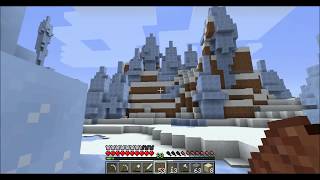 The Vortex Smp Episode 1! Just Derping Around and Explaining Things.25 min · ages 8-9Twenty-five minutes of low-key building, no prize in sight
 Crazy Illulsions In Minecraft. (Bigre)3 min · ages 8-9Short puzzle video, calm pace, nothing being sold
 Epic minecraft apartment complex!1 min · ages 8-9Under a minute, barely a cut in it
Teaching the tell, in one conversation
- Ask what the video is actually aboutBefore anything else, ask your child to describe the video in one sentence. If the answer is the toy, the food or the prize itself rather than the challenge, that is usually built around a product.
- Point at the prize and ask if it was necessaryWould the video still work if that item was not there? In the ones built around a product, the honest answer is no, the item is the whole reason it exists.
- Watch for a brand woven into the rulesSome videos are not about the product but still carry a brand throughout, present in the board, the props or the set. That is the quieter version, worth naming out loud when you spot it.
- Say it plainly once you have spotted it"That is an advert" is a simple sentence. Saying it out loud a few times tends to make the pattern easier to spot the next time, on this channel or any other.
Questions parents ask
Is MrBeast basically one long advert?
Not all of it. 255 of the 978 uploads we reviewed carry something to sell, which is roughly a quarter of the catalogue. The rest, including most of the Minecraft builds and let's-plays, do not have a product riding on them at all.
How can I tell if a video is selling something to my child?
Ask whether the product is the prize the challenge is chasing, or a brand that is just present while something else happens. In our review, 221 uploads were built entirely around a product and 34 had a brand running through an otherwise separate challenge, and the two feel different once you are looking for it.
Does Piko filter out videos that are secretly adverts?
It is one of the reasons a video does not make our shelf. Of the 664 uploads that did not make it, 221 were held back for being built around a product and 34 for having a brand running through them, alongside pacing and other concerns.
What's the difference between a sponsor mention and a video built around a product?
A traditional sponsor read is a break inserted into something else. In the videos described here, there is no break: the product is the reason the video exists from the first shot, which is exactly why it does not read as an advert to a child watching.