
Why a giant ship floats when a tiny coin sinks
Dr Binocs makes buoyancy and Archimedes’ principle approachable for younger science minds.
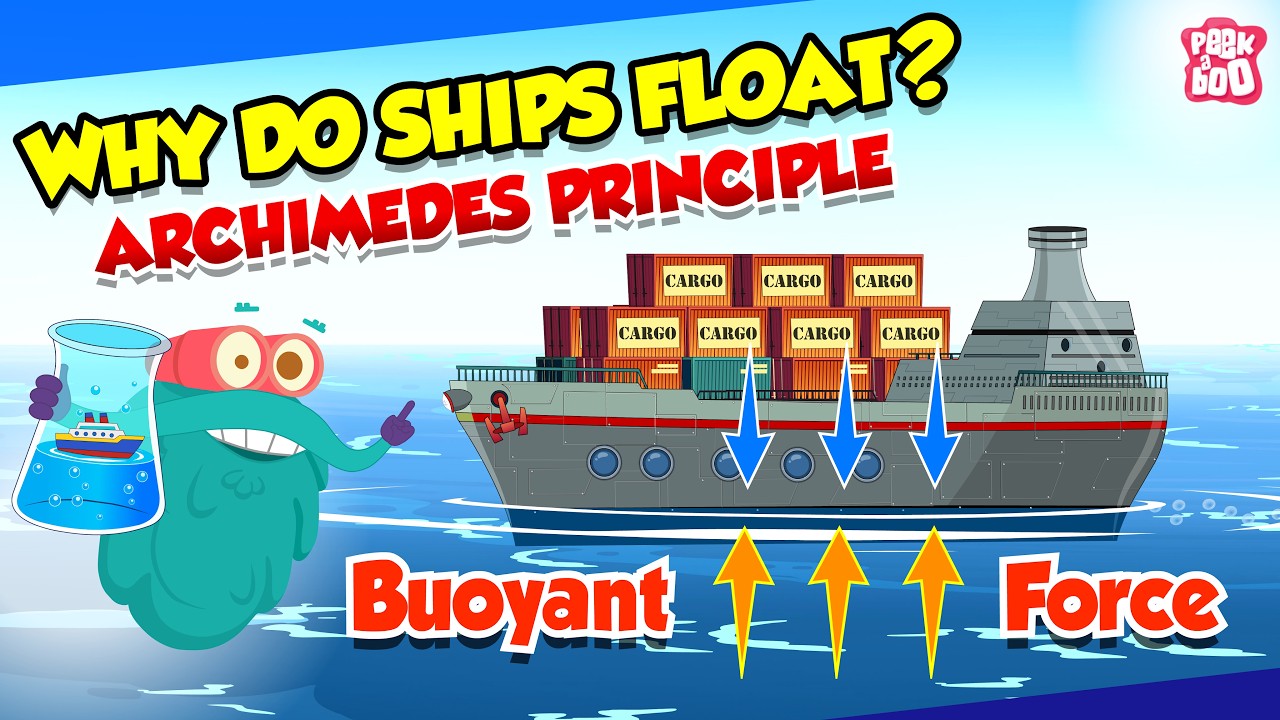

Ships are heavy enough to make ‘they just float’ a thoroughly unsatisfying answer. Dr Binocs spends six minutes explaining buoyant force and Archimedes’ principle for curious four- to seven-year-olds, using animation to make an invisible force easier to picture. The video is safe, moderately sensory and neutral in energy, with no listed trigger. Educational value is exceptionally high. Both sensory seekers and avoiders are marked suitable, and there is no commercial distraction. This is exactly the sort of question a bath toy can continue afterwards.
At a glance
Will it actually calm them down?
 Eases a wound-up mood back to settled.
 A gentle lift on a flat, low-energy afternoon.
 Steady enough for meltdown recovery.
Scores measure how reliably this video moves a child toward a settled, regulated state. In the Piko app, kids tell us their weather and we do the matching automatically.
For the long stretches where this sort of video does a lot of heavy lifting: surviving the holidays without a screen-time war.
Which kids will love it?
Why it works
A contradiction powers the lesson: metal can sink, yet a metal ship stays up. Explorers have a genuine puzzle to resolve, entertainers benefit from the animated explanation and makers can carry the idea into a simple floating test. The science is taught directly, so children leave with more than a memorable phrase. A manageable runtime keeps Archimedes from becoming an endurance event. The strongest follow-up is practical and small, comparing safe household objects in water while a towel waits nearby with justified suspicion.
When to reach for it
- Before a floating-and-sinking test Watch the explanation, then compare safe objects in a bowl of water.
- Alongside a forces topic Buoyancy gives younger children a concrete example of an invisible force.
- After a ship question The six-minute answer goes further than saying boats are hollow.
Sensory & SEN notes
If you are weighing this one up for an autistic child, the same checks we ran here are the ones worth running yourself: how to choose videos for autistic children.
If they love this, try these




Questions parents ask
Is How Do Ships Float suitable for a 6-year-old?
Yes. It is safe and designed for four- to seven-year-olds interested in science.
Does Dr Binocs explain Archimedes’ principle?
Yes. The video connects Archimedes’ principle and buoyant force to why ships remain afloat.
Is the ships video sensory friendly?
It has moderate intensity with no listed triggers, and both seekers and avoiders are marked suitable.
40+ checks per video, with a final pass from the review desk · Scored 20 July 2026 · We do not host videos; playback is via YouTube's official embed.