A colorful animated dive into the science of boredom
Discover why our brains get bored and how downtime actually sparks creativity.
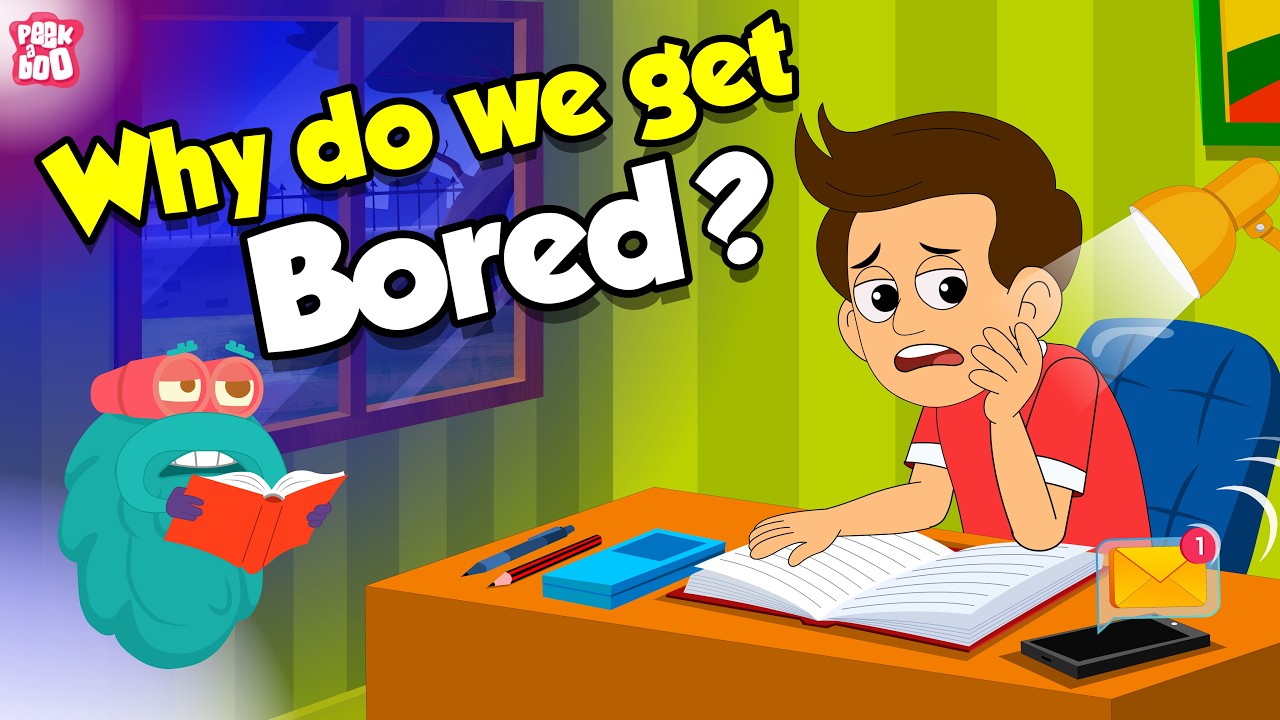

The animated educator Dr Binocs returns to explain the biological science behind boredom and how our brains process downtime. Using simple cartoon animations and humorous scenarios, the five-minute clip breaks down complex neuroscience into concepts younger primary school children can easily grasp. The narration is cheerful and clear, with steady visual pacing that keeps young viewers engaged. It is a helpful tool for parents wanting to explain that boredom is a normal, healthy state.
At a glance
Will it actually calm them down?
 Eases a wound-up mood back to settled.
 A gentle lift on a flat, low-energy afternoon.
 Steady enough for meltdown recovery.
Scores measure how reliably this video moves a child toward a settled, regulated state. In the Piko app, kids tell us their weather and we do the matching automatically.
Our age band is a starting point rather than a rule: what age videos your child should actually watch.
Which kids will love it?
Why it works
Explaining the brain science behind boredom gives children a practical understanding of their own emotional states. By framing moments of boredom as a natural spark for imagination and innovation, this animation helps young viewers reframe quiet time as an opportunity to create rather than a problem to complain about. It works well as a post-school chat starter on low-energy days.
When to reach for it
- After-school wobble A quick, light science video to bridge the gap between school and home tasks.
- Twenty minutes to cook dinner Keeps early primary kids entertained with a brief educational cartoon.
- Pre-homework pause Resets focus by explaining how the brain works before starting tasks.
Sensory & SEN notes
If you are weighing this one up for an autistic child, the same checks we ran here are the ones worth running yourself: how to choose videos for autistic children.
If they love this, try these


Questions parents ask
Is the cartoon styling too babyish for older primary kids?
Older children (eight plus) might find the character designs a bit young, but the science remains interesting.
Does the video offer practical solutions for boredom?
Yes, it explains how boredom encourages creative thinking and active play solutions.
Is this science video noisy or loud?
No, it uses standard cartoon sound effects and friendly, moderate voice levels.
40+ checks per video, with a final pass from the review desk · Scored 20 July 2026 · We do not host videos; playback is via YouTube's official embed.