
How Las Vegas Exists in America's Driest Desert: RealLifeLore's calm geography deep-dive
Eighteen unhurried minutes on water, engineering and the desert city that shouldn't work, built for a curious 8 to 9 year old.
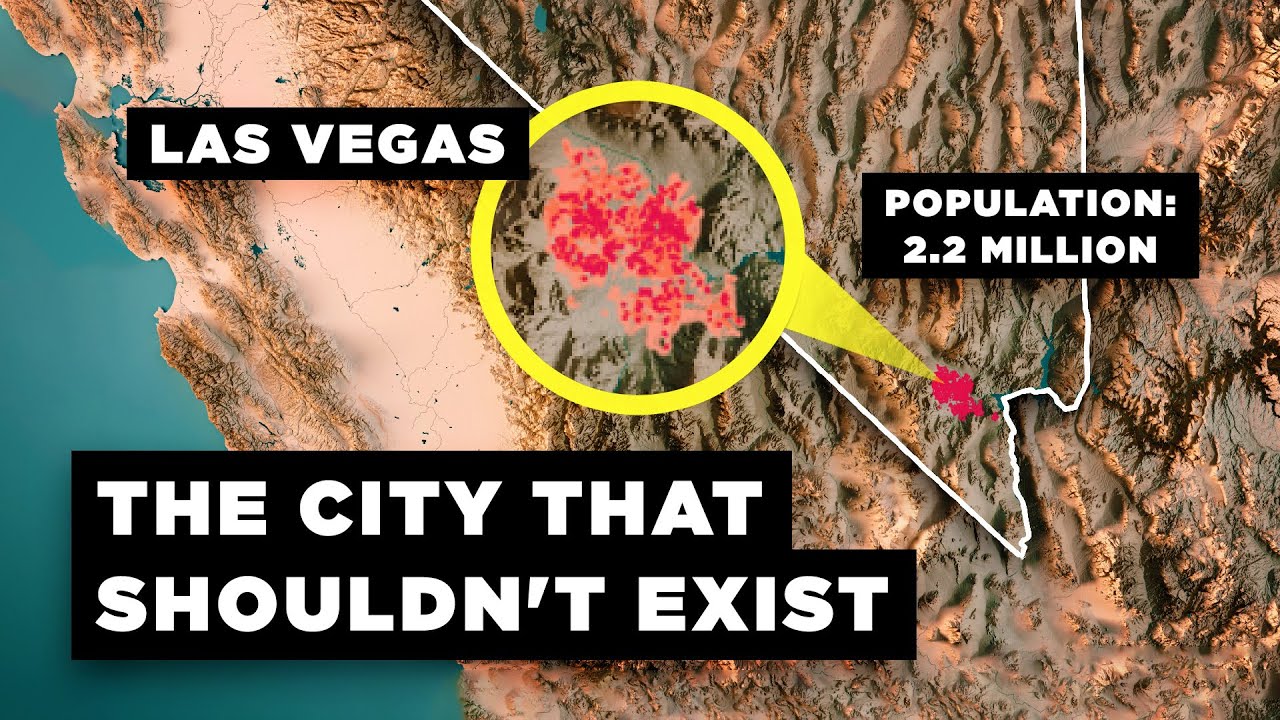

A proper sit-down documentary rather than a quick fact-snack: steady narration and a 6.5 second average shot length give yellow-to-green a strong 85, useful for settling a restless child into something meaty. It peaks hardest for 8 to 9 year olds, where Explorers scores 95 and Independents 90, this is one for a child happy to be told a long, layered story about the real world. Just don't expect it to entertain a wound-up 5 year old, our curators flag the concepts as too complex for younger children.
At a glance
Will it actually calm them down?
 Settles a restless mind into focus
 Some lift for a flat mood too
Scores measure how reliably this video moves a child toward a settled, regulated state. In the Piko app, kids tell us their weather and we do the matching automatically.
The 3:45pm crash this is built for has a name, and knowing it helps: after-school restraint collapse, explained.
Which kids will love it?
Why it works
RealLifeLore builds this like a proper explainer: a warm, moderate-energy narrator walks through how Las Vegas pulls water from the Colorado River and keeps growing in the middle of a desert, cut at a steady 6.5 second average shot length. Pacing scores 85, and with a natural endpoint and no cliffhanger, it is built to be watched start to finish rather than looped.
That steady, information-dense style is exactly why Explorers peaks at 95 for 8 to 9 year olds, well ahead of Independents at 90 and Dreamers at 60: this suits a child who wants to understand how the real world actually works, not one after a quick laugh. Our curators flag it as best for curious older children and calm learning time, and just as clearly note it is not for younger children, the concepts (water rights, urban planning) are genuinely complex.
On regulation, yellow-to-green sits at 85, solid for settling a restless mind into something absorbing, though blue-to-green (70) and red-to-green (60) are more modest. This is a video for redirecting energy into focus, not for lifting a flat mood or recovering from a meltdown.
When to reach for it
- After-school wobble. Eighteen absorbing minutes for a child who needs restless energy redirected into something interesting, yellow-to-green scores 85.
- Curious 8 to 9 year olds. Explorers peaks at 95 and Independents at 90, built for a child who likes a long, well-told factual story.
- Not for under 7s. Our curators flag the water-scarcity and urban-planning concepts as too complex for younger children.
Sensory & SEN notes
The engaging-without-frantic balance this video strikes is the one that tends to matter most for ADHD: what actually helps with ADHD and screen time.
If they love this, try these




Questions parents ask
What age is this best for?
It peaks at 8 to 9 years old, where Explorers scores 95. Our curators call out curious older children and geography enthusiasts by name. Independents scores 90 at the same age, so it also suits a child happy to watch and absorb solo. Under 7s are flagged as too young for the water-rights and urban-planning concepts.
Is it calming, or will it wind my child up?
Neither really, energy effect is scored neutral. Yellow-to-green (settling a restless child) sits at 85 thanks to the steady 6.5 second average shot length and warm narration, but it will not lift a flat mood (blue-to-green 70) or help much after a meltdown (red-to-green 60). Think focus, not comfort.
Does it have a presenter, and are they annoying?
Yes, a warm, moderate-energy American narrator carries all eighteen minutes. Presenter annoyance scores a low 2, and engagement tactics are flagged as none, no shouting for attention, just steady explanation with a natural ending and no cliffhanger.
Is it suitable for a child with additional needs?
Yes on every count we track: it is marked ASD-safe, PDA-safe, anxiety-safe, ADHD-friendly and sensory-avoiding safe, with low overall sensory intensity and no flagged audio or visual triggers. Safety score is 95, curator confidence 0.95.
40+ checks per video, with a final pass from the review desk · Scored 11 July 2026 · We do not host videos; playback is via YouTube's official embed.