
Perseverance Mars Rover Landing: Inside Story, with Mark Rober
A genuinely impressive 16-minute space documentary from someone who actually worked on the rover team.
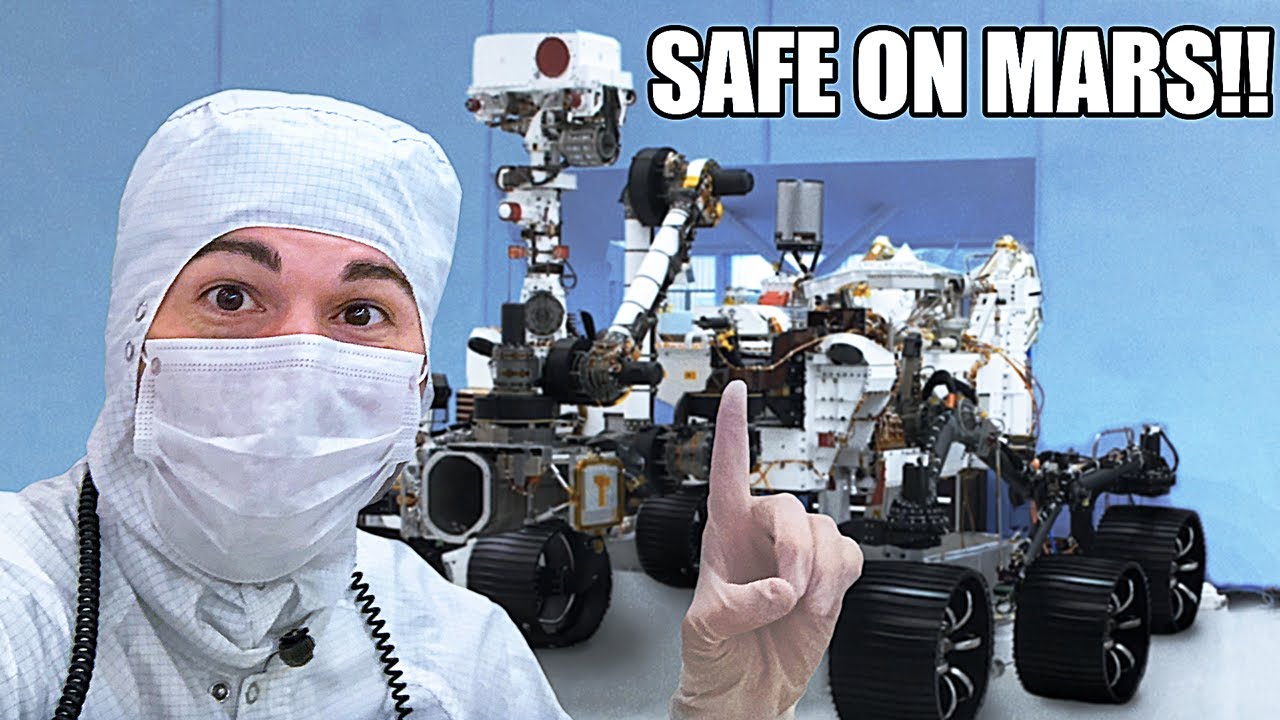

A rare thing: proper, detailed engineering content that doesn't talk down to kids, from someone who actually worked at NASA's Jet Propulsion Laboratory. Neutral rather than clearly calming or energising, with a solid yellow-to-green score (75) and low sensory intensity throughout. Best suited to curious 10-11 year olds interested in how things actually work, rather than younger children who may find the technical detail heavy going.
At a glance
Will it actually calm them down?
 Solid for settling a wound-up moment.
 Strong for lifting a flat, tired mood.
Scores measure how reliably this video moves a child toward a settled, regulated state. In the Piko app, kids tell us their weather and we do the matching automatically.
On how much of this a day is reasonable, the honest answer is less tidy than the headlines: how much screen time by age.
Which kids will love it?
Why it works
This runs 15 minutes 58 seconds at a steady documentary pace (average shot length 5.2 seconds, pacing score 85), with Mark Rober's warm, measured delivery keeping the tone calm and low-annoyance (score: 2) throughout. Unusually for this batch, it scores neutral rather than clearly calming or energising, it's the kind of video that holds attention through genuine interest rather than either revving up or winding down a child.
Regulation-wise, yellow-to-green scores a solid 75 and blue-to-green scores a strong 85, so it's useful both for settling a wound-up moment and lifting a flat one, while red-to-green sits more moderately at 40. There are no sensory triggers flagged at all, and overall intensity is low, a genuinely clean profile for content covering a high-stakes rocket landing.
Play style scoring peaks at 10 to 11, led by Explorer (95), Independent (95) and Companion (85): children who are curious about how things actually work and enjoy following a real, detailed story. Educational value scores a huge 95, among the very highest in this batch, which tracks: this is Mark Rober actually explaining a mission he helped build, not a simplified retelling.
When to reach for it
- Feeding a genuine curiosity Best suited to children who ask how things really work, rather than a simplified or babyish version of space content.
- A solid documentary sit-down At 16 minutes with a clean natural ending, it's a good length for focused, engaged viewing.
- Either settling or lifting mood Decent scores on both yellow-to-green (75) and blue-to-green (85) mean it works whether energy needs calming or a lift.
Sensory & SEN notes
The weather chips above are our shorthand for the mood a child arrives in: what Piko Weather means.
If they love this, try these





Questions parents ask
Is this too technical or complex for younger children?
It can be. The video's own best-fit list flags very young children who may find the technical explanations too complex, and play style scoring peaks much later, at 10 to 11. It's aimed at curious older children and aspiring engineers rather than preschoolers.
Are there any sensory concerns?
Very few. Overall sensory intensity is low, with no audio or visual triggers flagged at all, which is why it's rated safe for sensory-avoiding children as well as clearing every other SEN check: ASD-safe, PDA-safe, anxiety-safe and ADHD-friendly. Presenter annoyance also scores a low 2 out of 10.
Will this calm my child down or energise them?
Neither strongly, it scores as neutral. Yellow-to-green (75) and blue-to-green (85) are both solid, so it works reasonably well for settling or lifting mood, but red-to-green (40) is more moderate, so it's not a dedicated meltdown-recovery pick, more a genuinely engaging documentary watch.
Is the educational content genuinely accurate, or simplified for kids?
It's genuinely detailed: educational value scores a huge 95, one of the highest in this batch. Mark Rober previously worked as an engineer at NASA's Jet Propulsion Laboratory, so this is first-hand insight into the mission rather than a simplified retelling.
40+ checks per video, with a final pass from the review desk · Scored 11 July 2026 · We do not host videos; playback is via YouTube's official embed.