
Mars 2020: a genuinely educational look at NASA's next mission
Veritasium explains the Mars 2020 rover mission at a measured pace, built for curious, independent-minded explorers.


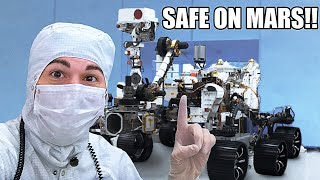
Derek Muller's Veritasium explains NASA's Mars 2020 mission with real technical depth, educational value scores 95, among the highest in this batch. Energy effect is scored neutral rather than calming though, so this is a genuinely engaging documentary rather than an active wind-down tool. It peaks for 8 to 11 year olds on Explorer and Independent, and our curator notes flag it as best avoided for very young children who may find the technical explanations too complex.
At a glance
Will it actually calm them down?
 Takes the edge off restless energy
 A mild lift for a flat mood
Scores measure how reliably this video moves a child toward a settled, regulated state. In the Piko app, kids tell us their weather and we do the matching automatically.
At this age the wider question is usually what comes after YouTube: what the UK under-16 social media ban means.
Which kids will love it?
Why it works
Veritasium's presenter style is rated warm with moderate energy, Australian, and a low annoyance score of 1. The tone sits at medium instructional level, real engineering and science concepts are explained, and the pace is measured rather than rushed (average shot length 6.2 seconds, pacing score 85).
Explorer and Independent both peak at 95 for ages 10 to 11 (Explorer also hits 95 at 8 to 9): this is content for a child who wants to understand how a real space mission actually works, not a simplified version of the story. Our curator notes flag it specifically for independent explorers and quiet time learning.
One honest note: the energy effect here is scored neutral rather than calming, so while yellow-to-green still scores a respectable 85, don't expect it to actively soothe a wound-up child the way some of the calmer videos in this batch do. Comfort rating sits at 80, and curator notes flag it as best avoided for very young children who may find the technical explanations too complex.
When to reach for it
- After school. Yellow-to-green scores 85, engaging rather than overstimulating.
- Twenty minutes to cook dinner. A natural-endpoint documentary that runs the length of a quick meal prep.
Sensory & SEN notes
The engaging-without-frantic balance this video strikes is the one that tends to matter most for ADHD: what actually helps with ADHD and screen time.
If they love this, try these





Questions parents ask
Is this too advanced for a younger child?
Possibly: our curator notes explicitly flag it as best avoided for very young children who may find the technical explanations too complex. It peaks for 8 to 11 year olds, where Explorer and Independent both score 95, real engineering and science content rather than a simplified version.
Will this calm my child down or wind them up?
Neither strongly: energy effect is scored neutral rather than calming or energising. Yellow-to-green still scores a decent 85, but this is better thought of as engaging, curious viewing than an active calm-down tool. Red-to-green, meltdown recovery, sits lower still at 60, so it's not the pick for right after a big wobble.
Is it actually educational?
Very much so: educational value scores 95, among the highest in this batch, and our developmental data marks the learning as overt rather than hidden. It's a genuine science documentary about NASA's Mars 2020 mission, not edutainment with the facts watered down.
40+ checks per video, with a final pass from the review desk · Scored 11 July 2026 · We do not host videos; playback is via YouTube's official embed.