
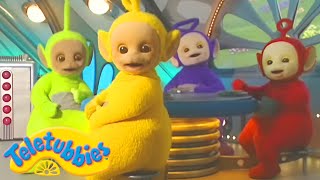
Teletubbies & the Hero Firefighter: a gentle People Who Help Us episode run
Nearly 43 minutes of classic, unhurried Teletubbies, built for the youngest viewers.


A long run of official Teletubbies episodes built around the People Who Help Us theme, and it's tuned for maximum settling: a 95 for taking a wound-up child toward calm and a 75 for meltdown recovery, both strong scores. It's specifically flagged as good for children needing emotional regulation, including autistic children. It's squarely for the preschool crowd though, and Piko doesn't rate it as especially ADHD-friendly, so it suits a quieter kind of attention.
At a glance
Will it actually calm them down?
 Good for windy, wound-up moods that need taking down a notch.
 Good for flat, low-energy afternoons that need a gentle lift.
 Good for stormy, meltdown-recovery moments.
Scores measure how reliably this video moves a child toward a settled, regulated state. In the Piko app, kids tell us their weather and we do the matching automatically.
Our age band is a starting point rather than a rule: what age videos your child should actually watch.
Which kids will love it?
Why it works
Teletubbies keeps things deliberately unhurried: an average shot length of 8.5 seconds and a pacing score of 95, among the calmest in our library, paired with a yellow-to-green score of 95 and a red-to-green (meltdown recovery) score of 75. There's no presenter steering the pace, just the Teletubbies' own gentle, repetitive world, and zero fear triggers logged for any age.
Dreamer and companion scores peak at 95 and 90 for 4 to 5 year olds, dropping off sharply after that: this is squarely preschool territory, verdict notes specifically flag it as suited to children needing emotional regulation and to autistic children who benefit from its predictable, repetitive structure. The title's People Who Help Us framing sits inside that same gentle pace rather than anything actiony.
One thing to know: Piko doesn't rate this as especially ADHD-friendly, likely because the slow, repetitive style asks for a particular kind of quiet attention rather than holding it through stimulation. For the right child, especially one needing to come down from a big feeling, it's one of the gentlest options in the library.
When to reach for it
- After a big meltdown. Scores 75 for meltdown recovery, with no presenter and low sensory intensity throughout.
- Calm-down before bed. A 95 for settling a wound-up child, built on slow, repetitive pacing with a natural ending.
- Sick day on the sofa. A perfect 100 comfort rating and a familiar, low-demand tone for when energy is low.
Sensory & SEN notes
If you are weighing this one up for an autistic child, the same checks we ran here are the ones worth running yourself: how to choose videos for autistic children.
If they love this, try these




Questions parents ask
Is Teletubbies good for a meltdown or big feelings?
Yes, it scores 75 out of 100 for bringing a child back from red-zone distress, backed by predictable, repetitive pacing and zero fear triggers logged. Piko's data specifically flags it as suited to children needing emotional regulation, including autistic children.
What age is this best for?
It's built for 4 to 5 year olds, where dreamer and companion scores peak at 95 and 90. Play style scores drop off sharply after that, and Piko's own guidance flags it as not suited to children over 7 or those wanting high-action content.
Is it good for ADHD?
Piko's data doesn't flag this as especially ADHD-friendly, likely because its slow, repetitive style suits quiet, settled attention rather than higher stimulation. It is rated safe for autistic, PDA and anxious children.
How long does the episode run?
42 minutes 56 seconds, a long, steady sitting with a comfort rating of 100 and a natural ending, so there's no cliffhanger to negotiate over switching off.
40+ checks per video, with a final pass from the review desk · Scored 11 July 2026 · We do not host videos; playback is via YouTube's official embed.