
How Do Stars Work? A calm, curious dive into astronomy
Gravity, nuclear fusion and the night sky, explained at a pace that actually settles rather than excites.
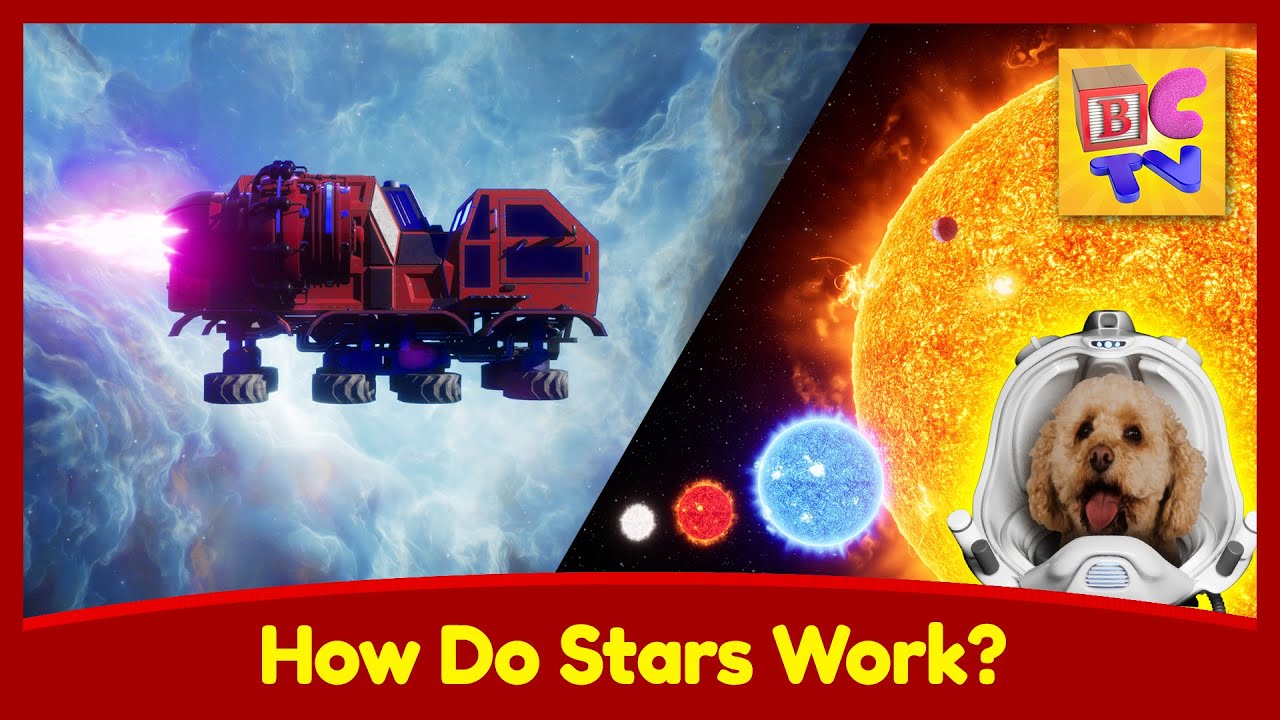

This Brain Candy TV explainer manages something unusual for factual content: a calming energy effect alongside a strong educational score of 95, with explorer-style curiosity peaking at 95 out of 100 for ages 6 to 7. At 11 and a half minutes it's long enough to properly cover stars and gravity without racing through them.
At a glance
Will it actually calm them down?
 Reliably settles a wound-up mood
 Good at lifting a flat mood too
Scores measure how reliably this video moves a child toward a settled, regulated state. In the Piko app, kids tell us their weather and we do the matching automatically.
This is a bedtime-shaped watch, and it is not the only one we have found: the calmest videos we have found for before bed.
Which kids will love it?
Why it works
The pacing does a lot of work here: a pacing score of 85 and an average shot length of 6.5 seconds give the presenter room to explain nuclear fusion and gravity without rushing. That translates into a genuinely calming energy effect, unusual for space-and-science content aimed at curious kids.
Regulation numbers back that up: yellow-to-green scores 90, among the strongest in this batch, with blue-to-green close behind at 80. Red-to-green trails at 65, so it suits settling a wound-up or under-stimulated child better than meltdown recovery specifically.
Play styles lean heavily explorer (95 at ages 6 to 7) and dreamer (80), a nice combination of curiosity and imagination. Sensory intensity is rated low with no audio or visual triggers flagged at all, and educational value tops out at 95, genuinely dense with facts rather than padded around them.
When to reach for it
- Calm, curious evening viewing A yellow-to-green score of 90 and a calming energy effect make this a solid pre-bedtime pick for a science-loving child.
- After school wobble Low sensory intensity and steady, unhurried pacing help settle a wound-up mood.
- Feeding a space obsession Explorer scores peak at 95, built for a child who wants real answers about stars and gravity.
Sensory & SEN notes
The engaging-without-frantic balance this video strikes is the one that tends to matter most for ADHD: what actually helps with ADHD and screen time.
If they love this, try these




Questions parents ask
Will this actually calm my child down?
The data suggests yes. It has a calming energy effect with a yellow-to-green score of 90, and a pacing score of 85 that gives the presenter room to explain ideas without rushing, unusually gentle for space-and-science content.
Is this too advanced for a younger child?
It's pitched more at 6 to 7 year olds, with explorer curiosity peaking at 95 there, though dreamer and companion scores stay reasonably strong at 4 to 5 too. A very young child may need you alongside for ideas like nuclear fusion.
How much will my child actually learn?
A good amount, on the numbers. Educational value scores 95 out of 100, covering gravity, nuclear fusion, atoms and the night sky, with the learning presented directly rather than hidden inside a story, closer to a proper mini science lesson than typical edutainment.
Are there any sensory concerns?
None flagged. Overall sensory intensity is rated low, with no audio or visual triggers listed at all, making it one of the gentler factual videos in the whole library and a safe default if you're not sure what else to pick.
40+ checks per video, with a final pass from the review desk · Scored 11 July 2026 · We do not host videos; playback is via YouTube's official embed.