
Stampolines and Number Fun: Numberblocks makes maths stick
A long, colourful Numberblocks compilation covering counting through to multiplication, built for genuine early-years numeracy learning.


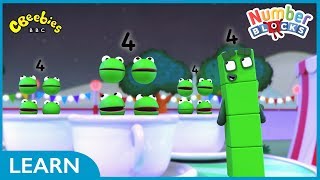
Over half an hour of Numberblocks, covering everything from basic counting to multiplication and square numbers. Educational value scores a maximum 100, and it scores 90 for settling a wound-up child too, a rare combination of genuinely teaching something and being calming to watch.
At a glance
Will it actually calm them down?
 Reliably settles a wound-up child.
 Helps lift a flat, tired mood.
Scores measure how reliably this video moves a child toward a settled, regulated state. In the Piko app, kids tell us their weather and we do the matching automatically.
The zone labels in that chart come from a framework your school may already use: the Zones of Regulation, for parents.
Which kids will love it?
Why it works
Shots average 5.2 seconds and pacing scores a high 85, brisk and colourful without tipping into chaos. High-pitched voices and bright colours are both flagged, keeping sensory intensity at moderate, standard for CBeebies-style maths content aimed at engaging young children.
It peaks with Explorers (95) at age 4 to 5 and 6 to 7, alongside strong Maker (85) and Companion (85) scores at age 4 to 5, the profile of a child who loves discovering how numbers work. The tone is suggestion-based and fully autonomy-respecting, landing it as ASD-safe, PDA-safe, anxiety-safe and ADHD-friendly across our SEN scoring, with no fear triggers flagged at any age.
Our data flags a high risk of an 8 year old finding the primary colours and high-pitched voices babyish, so it's squarely aimed at the early-years and KS1 crowd our verdict data names directly. Within that window, it's about as strong an educational pick as we score.
When to reach for it
- Early years numeracy practice. Explicitly flagged best_for early years numeracy and UK school readiness.
- After-school wobble. Settles a wound-up child well (90) while still teaching something useful.
- Longer independent viewing. Runs 35 minutes across several number concepts, easy to dip in and out of.
Sensory & SEN notes
The engaging-without-frantic balance this video strikes is the one that tends to matter most for ADHD: what actually helps with ADHD and screen time.
If they love this, try these





Questions parents ask
Will this actually help my child with maths?
That's the specific intent: educational value scores a maximum 100, and our verdict data lists early years numeracy, visual learners and UK school readiness directly. It covers counting through to multiplication and square numbers.
Is this too babyish for my 8 year old?
Likely yes: our data flags a high risk of rejection at that age, mainly down to the primary colours, simplified visuals and high-pitched voices. It's aimed squarely at early years and KS1 children.
Will the bright colours or voices overstimulate my child?
High-pitched voices and bright colours are both flagged, keeping sensory intensity at moderate rather than low. It's a common trade-off for maths content built to hold a young child's attention.
Is it calming or does it wind children up?
It leans calming: 90 out of 100 for settling a wound-up child and 85 for lifting a flat mood. Energy effect is scored neutral overall, so it's engaging without being overstimulating.
40+ checks per video, with a final pass from the review desk · Scored 11 July 2026 · We do not host videos; playback is via YouTube's official embed.